
Chasing: From Tools to a Copper Mask
10. 10. 2026
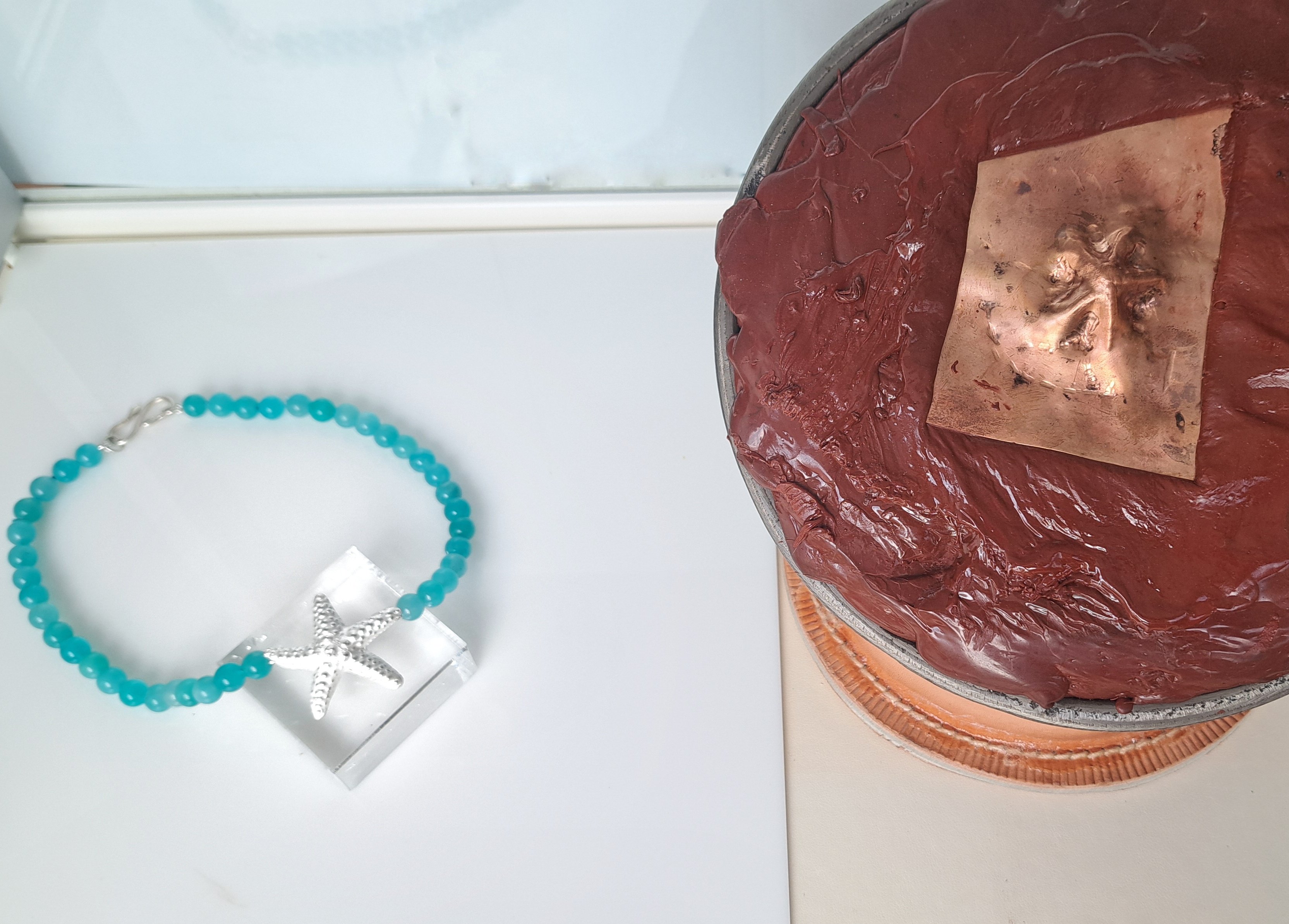
Chasing is one of the oldest metalworking techniques. Instead of cutting into the surface or removing material, the metal is gradually moved, deepened, raised, and shaped into relief through small, controlled blows. Using specialized punches, hammers, and chasing pitch, a flat sheet of metal can become lines, textures, volume, and three-dimensional form. The technique requires patience, a feel for the material, and great precision, resulting in a distinctly handmade metal surface that carries the traces of time, rhythm, and work.
Chasing was historically used in the area of present-day Slovenia as well; the Vače situla, one of the most important objects of Slovenian archaeological and craft heritage, was made using this technique. Today, knowledge of chasing is rare, which is why this programme also focuses on preserving and passing on this craft.
In this comprehensive masterclass, we will approach chasing as a complete process: from understanding the technique and preparing the tools to gradually shaping metal into a relief, three-dimensional form. The programme will be led by Christoph Steidl Porenta, a goldsmith, silversmith, and restorer of precious metals.
What we will do
The programme will be divided into two main sections:
- making chasing punches,
- chasing a three-dimensional copper face mask.
Throughout the programme, we will work practically. We will first get to know the tools, materials, and basic principles of chasing, then use the punches we have made to work with a copper sheet. Through exercises, we will practice drawing lines, shaping volume, defining the facial form, and finishing the surface.
The programme fee includes:
- practical work under the mentorship of Christoph Steidl Porenta,
- work in a small group of up to six participants,
- use of the professionally equipped jewelry lab,
- use of the necessary tools and equipment,
- materials for exercises and finished pieces,
- making your own chasing punches,
- making a three-dimensional copper face mask.
Everything made during the programme will be taken home by the participants.
Section 1: making chasing punches
Chasing punches are specialized tools used to gradually shape metal into lines, textures, depressions, and volumes. Different punch shapes create different effects on the metal surface, which is why understanding and making the tools is an important part of the process.
In this section, we will:
- learn about the history of chasing and the basic principles of the technique,
- examine the tools used in chasing,
- design punch shapes,
- begin cold-shaping and hot-forging the punches,
- continue with sanding and polishing the tools,
- prepare the punches for use in the next stage of the programme.
This will give us insight into how the tool is connected to the result: what kind of mark it leaves in the metal, how it affects the shaping of the surface, and why precise tool preparation is so important in chasing.
Section 2: chasing a copper face mask
In the second part, we will use the punches we have made to chase a copper sheet. We will learn how to place the metal into chasing pitch, how to begin with basic lines, and how a flat surface is gradually transformed into a three-dimensional form.
In this section, we will:
- Learn how to correctly place a copper sheet into chasing pitch,
- practice drawing lines and using the punches,
- begin forging the rough form into the copper sheet,
- define the basic lines of the face,
- continue shaping volume,
- use specialised punches for details,
- gradually refine the facial form,
- remove the piece from the chasing pitch,
Carry out the final surface treatment: sanding, polishing, and patination.
Who the programme is for
The programme is intended for anyone with basic metalworking knowledge who wants to gain an in-depth understanding of chasing. It is suitable for makers working in jewelry, design, metalwork, restoration, sculpture, and related fields who are interested in hand metalworking, relief surface shaping, and the preservation of rare craft knowledge.
Previous knowledge
Completed training for Goldsmithing Bench 1 is required to participate.
Does the programme count as training?
No. The programme does not count as training for independent use of additional equipment in the Jewelry Lab.
Schedule
The programme will take place across eight sessions, on Fridays from 16:00 to 20:00 and on Saturdays from 10:00 to 14:00.
About the mentor
Christoph Steidl Porenta was born in Munich in 1965. In 1988, he was accepted into the goldsmithing school at Münsterschwarzach Abbey while completing the theoretical part of his education in Würzburg. Since 1993, he has worked as an independent designer in the fields of goldsmithing, silversmithing, and restoration in his workshop, Zlatarna Zlato runo. In recent years, he has participated in numerous exhibitions in Slovenia, Germany, and France and passes on his knowledge to apprentices as well through demonstrations and lectures in collaboration with various institutions and museums.
The programme will be carried out with the assistance of Sara Mermal and Eva Kušter.
Courses priced above €100 can be paid in two installments. Payment in two installments is available at the Made in Rog store or by bank transfer based on a pro forma invoice. To arrange payment by invoice, please contact us at tajnistvo@center-rog.si.
***
Participants meet 15 minutes before the start of the programme in the entrance hall of Center Rog. Please store your personal belongings in the lockers, which will be shown to you by the mentor or assistant. Please do not be late, as this disrupts the work process. In case of late arrival, we unfortunately cannot guarantee entry to the lab.
The programme is held in Slovenian, unless stated otherwise.
In case of cancellation, we will notify you two days before the scheduled start.
If you are unable to attend the programme, the participation fee is non-refundable and the date cannot be changed. You may transfer your place to another person; please notify us at least 24 hours before the start at nakit@center-rog.si.
We look forward to your company and creating together!
See more


Dialekt
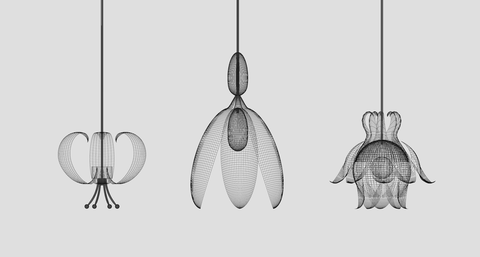
Sramežljivka is a pendant lamp designed to create a healthy and natural indoor environment using nothing but the intelligence of nature. Enclosed living and working spaces can pose significant health risks due to mould and the presence o...